5 Reasons to Start Donating Today, and the Tax Rules
Five reasons to start donating now, plus India's current tax rules: Section 133 (earlier 80G), the Rs 2,000 cash limit and the default-regime catch.

The Pushpa Narendra Foundation
Published · Updated · 4 min read

Start now, because small gifts add up, an approved charity answers to the tax department, and you may get a deduction. The deduction is real but conditional: it depends on your tax regime, how you pay and the charity's approval. Here are five reasons, with the rules as they stand in October 2026.
1. Can donating to charity save you tax?
Sometimes. A gift to an approved charity can lower your taxable income if your regime allows deductions. For money given on or after 1 April 2026, the rule is Section 133 of the Income-tax Act, 2025. It replaced Section 80G of the 1961 Act on the day the new Act came into force. The 1961 Act still governs earlier tax years.
For an ordinary approved charity you deduct 50% of what you give. All such gifts together are capped at 10% of your adjusted gross total income, and the excess is ignored. Give Rs 10,000 and your taxable income falls by Rs 5,000. What that saves depends on your slab.
Three conditions catch people out:
- Only money counts. Goods, food and clothes earn no deduction.
- A donation above Rs 2,000 must go by a mode other than cash, such as UPI, card, net banking or cheque.
- The default lower-rate regime (section 202 of the new Act, section 115BAC of the old) allows no donation deduction. You must opt out to claim, and opting out affects your whole return. Ask your chartered accountant first.
2. Do small gifts matter?
They do, because they repeat. Rs 500 a month comes to Rs 6,000 a year, and a charity can plan around money that arrives on a schedule. You do not need a big first gift. You need one you will keep up.
3. Why give to a charity that reports your gift?
An approved charity has legal duties. Under Section 354 it must keep regular accounts, send the tax department a statement of donations and give you a certificate. The department checks your claim against that statement. This does not prove a charity is well run, but it leaves a paper trail.
Before you pay, ask for:
- the charity's approval details and dates. Approval runs for three or five tax years, depending on the case, and a gift made after it lapses earns no deduction;
- your donation certificate (Form 114 under the 2026 rules, Form 10BE under the old ones);
- a receipt showing the charity's name, PAN, address and registration number, and your amount.
Give the charity your PAN or Aadhaar number too. It reports donor details, and your claim has to match.
4. Does giving your time count?
It counts for the cause, not for your return, which recognises only money. Volunteering also puts you among people who care about the same things. Offer a skill if you have one, such as accounts, teaching or design. See how to get involved.
5. Does giving teach children anything?
Children notice what adults do with money. If you give regularly and explain why, giving becomes part of family life. We have no study to quote, so read this as a parent's view, not a finding.
How TPNF is involved
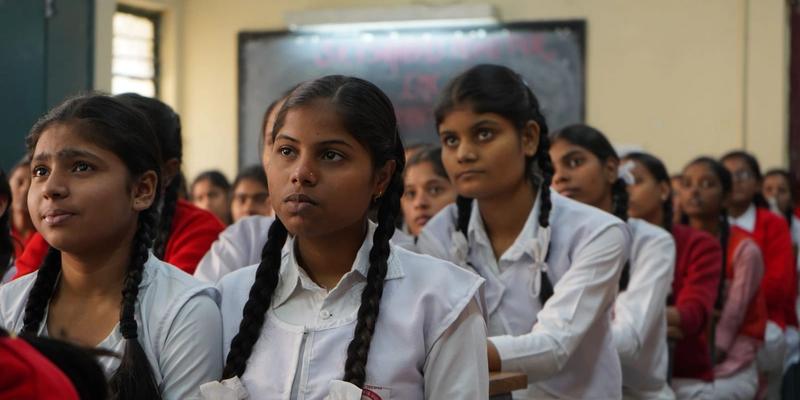
The Pushpa Narendra Foundation is a public trust in Noida. It states that it is registered under Section 12A and approved under Section 80G. We work on girls' and women's health through the Swasth Nari Mission (healthcare) and on school life-skills and education for girls (education). To give, start at donate, and ask for your certificate with the approval details.
Frequently asked questions
Is Section 80G still used? Yes, for tax years that began before 1 April 2026. From that date the matching section is 133.
Can I claim for donating goods? No. Section 133 allows a deduction only for a donation made as a sum of money.
What if I give more than 10% of my adjusted gross total income? The excess is ignored. The tax department's 80G FAQ says it cannot be carried forward.
Can I donate in cash? Cash up to Rs 2,000 can qualify. Above that, use another mode.
This is general information, not legal advice. Check with your chartered accountant, because the answer depends on your income, regime and filing.
Sources
- PIB, Income-tax Act, 2025 comes into force, 1 April 2026
- Gazette of India, The Income-tax Act, 2025, assented 21 August 2025
- Income Tax Department, Section 133, reviewed 27 September 2026
- Income Tax Department, Section 354, reviewed 27 September 2026
- Income Tax Department, FAQs on Section 80G, December 2025
- Income Tax Department, Forms as per Income-tax Rules, 2026, accessed 5 October 2026

Written by
The Pushpa Narendra Foundation
When a young girl drops out of school due to period poverty or unmanaged anemia, her potential is locked away long before her adulthood begins. At The Pushpa Narendra Foundation (TPNF), we believe education and health cannot exist in isolation.
About us